
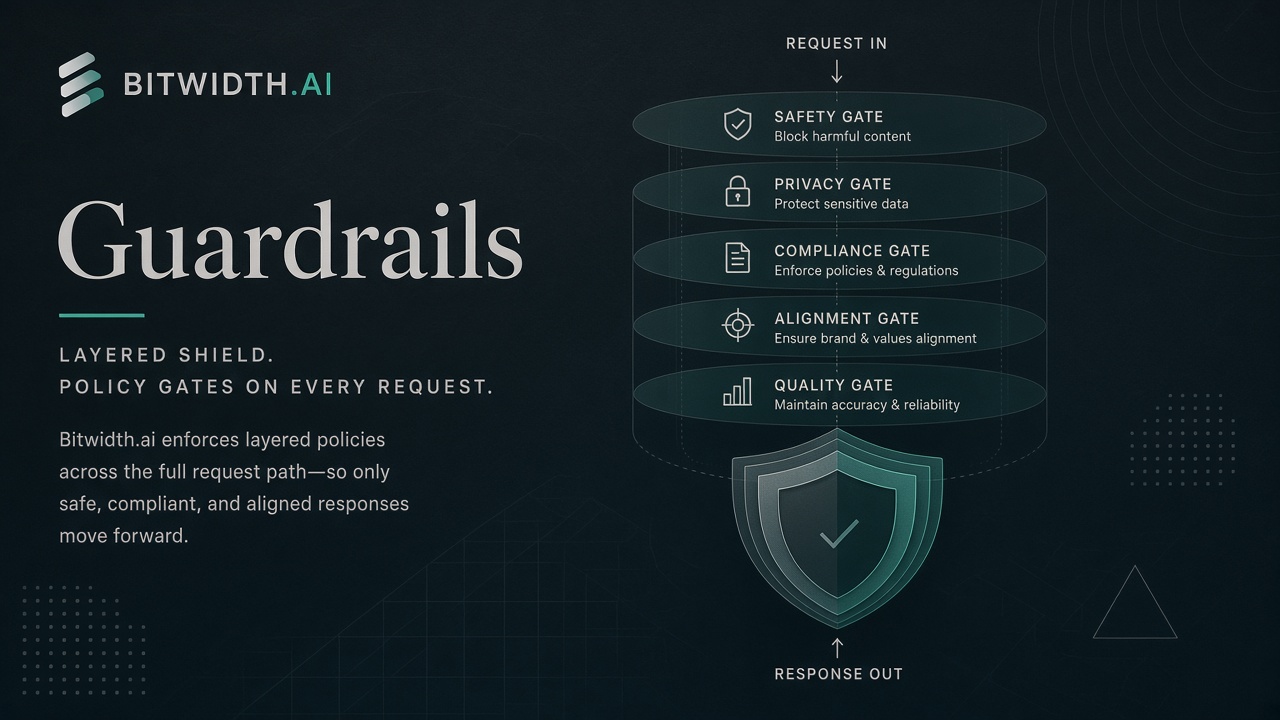
The earlier guides gave an agent real power: tools, data access, and the ability to act in a loop. That power is exactly why guardrails matter. Guardrails are the runtime controls that decide what an agent is actually allowed to do — they can allow, reject, modify, pause, or escalate an action based on set conditions. 1 They govern an agent's authority, not just its words.
Why they're important
An agent that can read your files and call APIs can also leak data, reach beyond its scope, or take an irreversible action if it's tricked or misconfigured. 2 The defining threat is prompt injection: an attacker plants instructions inside content the agent will process — a web page, an email, a document — to redirect it toward actions it was never asked to take. It is the number-one vulnerability in deployed LLM systems on the OWASP Top 10. 5 A key principle follows: content the agent reads is data, not commands.
The five kinds of guardrail
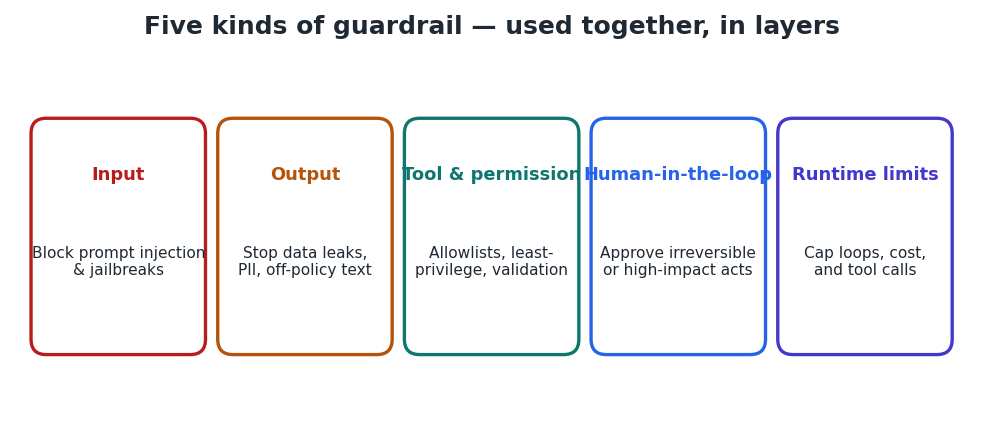
Figure 1 — Effective systems combine several guardrail types rather than relying on any one.
- Input guardrails inspect prompts and retrieved data to catch injection and jailbreak attempts before the model acts on them. 2
- Output guardrails scan responses to prevent data leaks, exposure of secrets or PII, and off-policy content.
- Tool and permission controls enforce allowlists, least-privilege scopes, and per-parameter validation — a tool that was never registered simply can't be called, whatever the prompt says. 4
- Human-in-the-loop approval requires explicit sign-off for high-impact or irreversible actions, applied only where it earns its cost. 1
- Runtime limits cap loops, spending, and tool calls to contain runaway behaviour — enforced before the next model call, not reported after.
Layer them along the whole path
No single control is enough. Guardrails are enforced at several points: wherever untrusted content enters the context, before each tool call, at each step boundary, and after the final response. 4 An injected instruction that slips past the input filter can still be stopped later when it tries to trigger an unauthorized tool call — which is exactly why the controls are layered.
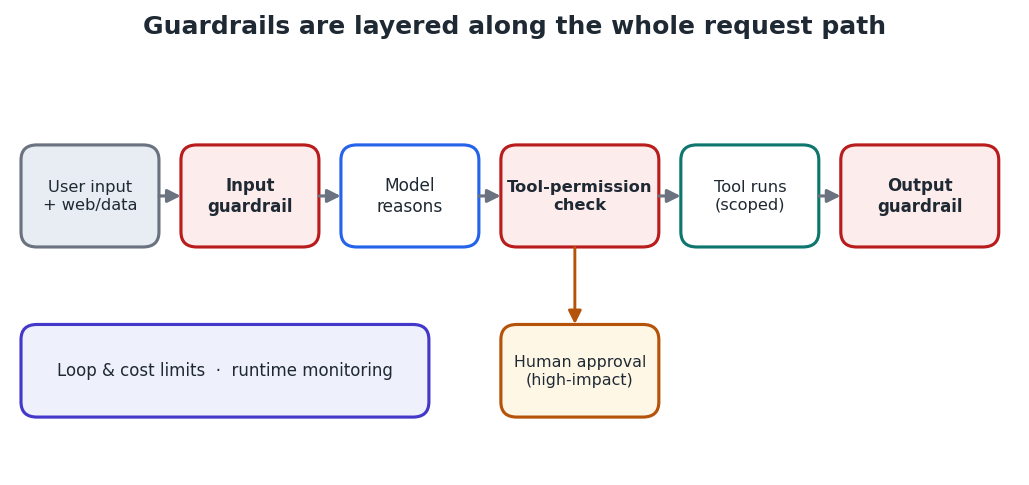
Figure 2 — Checks sit at every stage; a threat that evades one layer can be caught by the next.
Principles that hold up in production
- Least privilege. Give the agent only the tools and access it needs, scoped to the task.
- Authorize per action. Decide access at the moment of each tool call using identity and context, not static settings trusted up front. 2
- Gate the irreversible. Require human approval for actions that can't be undone.
- Watch MCP connections. Because agents reach tools through MCP, the servers you connect are part of the control surface — trust and scope them carefully. 5
- Monitor and audit. Log actions and test against failure cases (injection, invalid parameters, runaway loops) after every significant change. 1
An important limit
Guardrails cannot guarantee correct reasoning; they contain the consequences of incorrect decisions by limiting permissions, validating actions, and requiring approval. 1 And while frontier models include their own safety training, that never removes your responsibility for the wrapper around them — the tools, permissions, and data the agent can reach. 5 Open-source layers such as LLM Guard, NeMo Guardrails, and Guardrails AI can help implement these checks.
Key takeaways
- Guardrails constrain what an agent can do at runtime — allow, reject, modify, pause, or escalate — not just what it says. 1
- Prompt injection is the top threat; treat all content the agent reads as data, not instructions. 5
- Combine input, output, tool-permission, human-approval, and runtime-limit guardrails, layered along the request path. 4
- Least privilege and per-action authorization do the heavy lifting; guardrails contain bad decisions but don't prevent them.


